

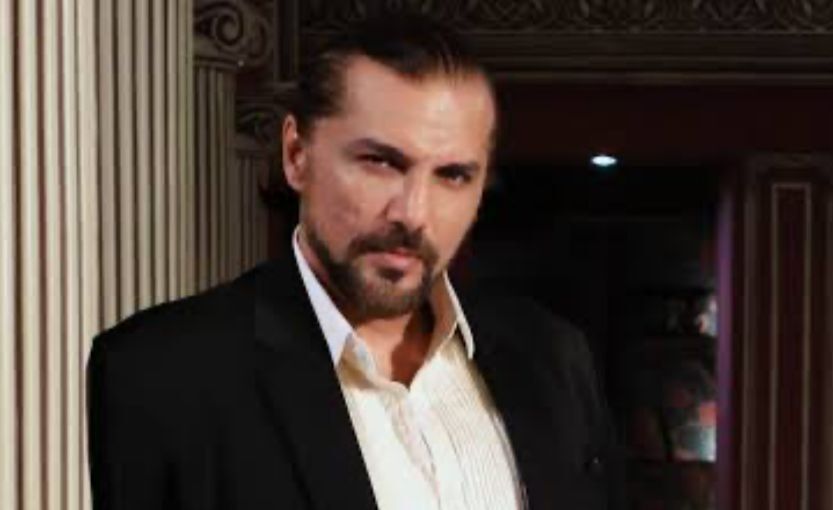
Actor Chetan Hansraj is at the forefront of a major leap in Indian digital entertainment with his groundbreaking project Kaal Nagari, the country’s first-ever AI-generated series, produced by ALTT. Combining cutting-edge technology, a futuristic narrative, and a young, driven team, Kaal Nagari marks a bold step into the future of storytelling.
Reflecting on the series’ origin, Chetan Hansraj shared, “People always said, ‘Someday we’ll create something like this.’ We didn’t just dream it—we did it. We’ve put India on the global map for AI-generated content. We didn’t wait for Hollywood—we led the way.”
The series was remarkably completed in just two and a half months by a small team of 8–9 individuals, all in their early 20s. “Their energy was phenomenal,” Chetan recalls. “They told me, ‘Sir, we’ll make it happen. We won’t give up.’ And they didn’t.”
Set in a futuristic version of Mumbai, Kaal Nagari follows a journalist, a detective, and a principled cop as they join forces against a powerful crime syndicate that has taken over the city. “We imagined Mumbai 30–40 years ahead—what if a gang controlled the entire city? That’s the world we created,” Chetan Hansraj explained. “The characters felt like they arrived on their own.”
The path to innovation, however, was far from smooth. “At first, nothing worked. Everything was failing. But once we cracked a few key elements, it all came together,” he said. The result is far beyond static AI visuals—Kaal Nagari features fully expressive characters with real performances, gestures, and dialogue, thanks to motion-capture tech that digitally mapped Chetan’s own acting onto AI models.
“AI isn’t replacing actors,” Chetan clarified. “It’s my expressions, my gestures, my voice. AI is the tool—the performance still belongs to the actor.”
Far from eliminating jobs, Chetan sees AI as an enabler. “We gave work to actors who rarely get chances. In future, we can scan anyone—pay them, and use their digital selves. Budget and location are no longer barriers. Vision is all you need.”
He also believes the future lies in micro-dramas. “Audiences don’t want 45-minute episodes anymore. Give them 2–3 minutes of gripping content—that’s where content is heading.”
